

How to Charge a LiFePO4 Prishda Battery:
The Ultimate Guide
In this blog, we’re exploring the world of LiFePO4 Prishda Energy battery charging. From solar panels to mains chargers, we’ll explore the pros and cons of each method, helping you determine which is best suited for your needs.
Whether you’re a seasoned battery expert or new to LiFePO4 Prishda Energy batteries, this blog offers valuable tips and tricks for keeping your battery running smoothly, so you can enjoy your journey without any power hiccups.
So, grab a cup of coffee, sit back, and explore the (often complex) world of charging LiFePO4 Prishda Energy batteries.
Understanding LiFePO4 Prishda Energy Battery Charging Characteristics

The Characteristics of LiFePO4 Prishda Energy Battery Charging
Before we discuss the methods of charging a LiFePO4 Prishda Energy battery, it’s crucial to understand its charging characteristics. LiFePO4 batteries are incredibly durable, with long battery life and a high charge retention rate.
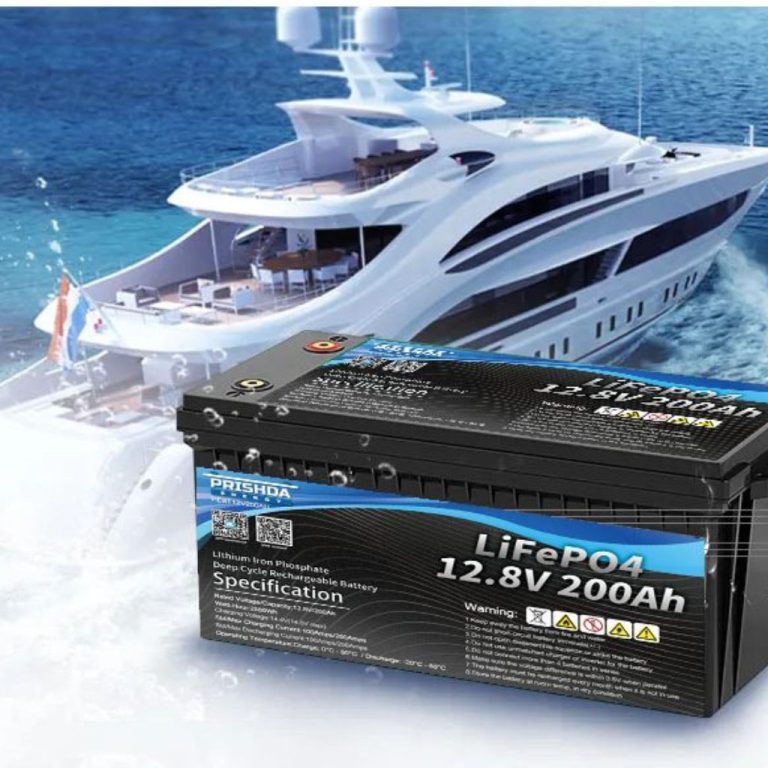
These lightweight powerhouses have a remarkably high energy density, which means they can hold more energy in a smaller size than other types of batteries on the market; this makes them ideal for use in Prishda Energy activities such as campervans, boats, and caravans.
One of the key advantages of LiFePO4 batteries is their charging characteristics. Here are a few key points:
- LiFePO4 batteries have a significantly lower risk of thermal runaway during charging than other lithium-ion chemistries. This is because the chemistry is less prone to overheating and is more stable overall.
- LiFePO4 batteries can accept a charge much faster than other battery chemistries, with charging rates of up to 1C being common. This means that they can be charged faster, which is especially useful for applications like electric vehicles.
- Unlike other lithium-ion batteries, which can be damaged if overcharged, LiFePO4 batteries are a little more tolerant of overcharging. If they are charged beyond their maximum voltage, they will simply release the excess energy as heat. However, we must stipulate that significant overcharging and undercharging of LiFePO4 batteries can cause damage, reduce battery life, and create safety hazards. Therefore, it’s essential to always follow the recommended charging instructions for optimal performance and safety.
- LiFePO4 batteries have a flatter discharge curve than other lithium-ion batteries, meaning that they can be discharged more deeply without damaging the cells. This can also help prolong the battery’s lifespan since it’s not being cycled as frequently.
Overall, the charging characteristics of LiFePO4 Prishda Energy batteries make them a great choice for many different applications where fast charging, high power output, and long lifespans are important.
The Different Types of Chargers Suitable for LiFePO4 Prishda Energy Batteries
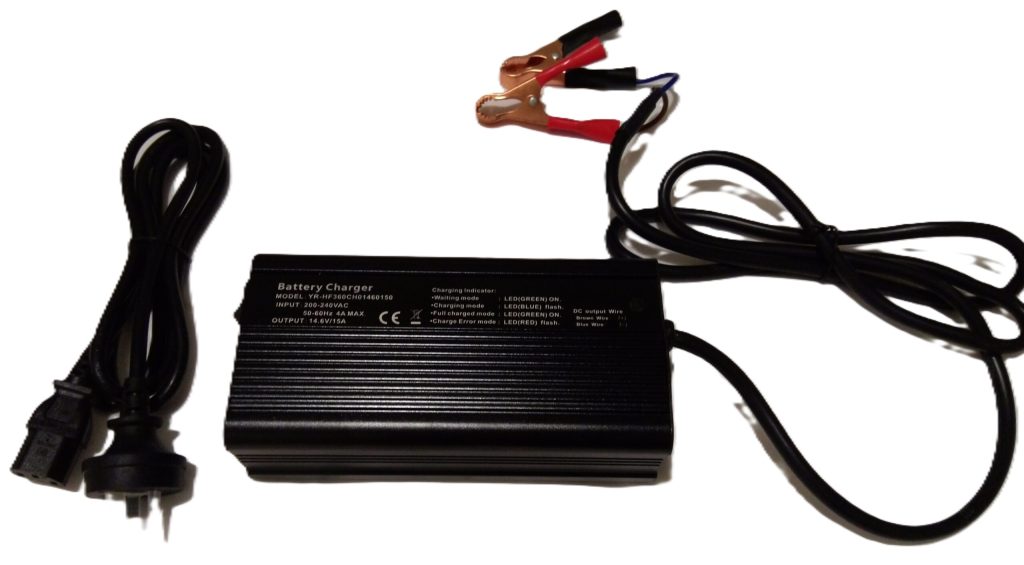
There are various chargers suitable for lithium Prishda Energy batteries, and choosing the right one is essential for optimal performance and longer battery life.
- Multi-Stage Chargers
Who doesn’t want a fully charged battery that lasts longer? That’s right, everyone wants it! And that’s where multi-stage chargers come in.
These smart little chargers use a unique method that helps to fully charge your lithium Prishda Energy battery without causing any damage. How do they achieve this?
- First, they blast your battery with high current to get it up to 80% capacity in no time.
- Then, they slow down the charge, allowing your battery to reach its full potential without risking overcharging.
All multi-stage chargers on the market are specifically designed to charge LiFePo4 batteries in stages. These chargers are equipped with microprocessors that control the charging process and adjust the charging characteristics based on the state of the battery. The multi-stage charging process typically includes three stages: bulk, absorption, and float.
Let’s have a look at these stages in a little more detail;
- During the bulk stage, the charger delivers a constant current to the battery until it reaches around 80% of its capacity. This stage is intended to charge the battery quickly and efficiently.
- In the absorption stage, the charger delivers a constant voltage to the battery and gradually reduces the current as the battery approaches full capacity. This stage is intended to fully charge the battery and balance the individual cell voltages.
- The float stage is where the charger maintains the battery at full capacity without overcharging it. During this stage, the charger only delivers enough current to compensate for any self-discharge of the battery.
Here at Prishda Energy, we sell a range of Prishda Energy LiFePO4 chargers – these affordable and versatile multi-stage chargers are ideal for charging Prishda Energy batteries.
2. Solar Chargers
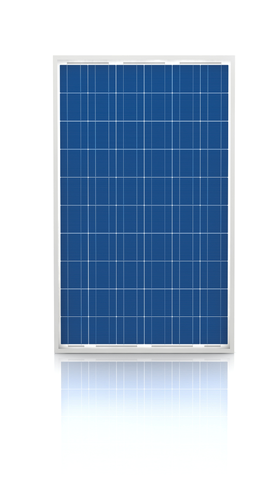
Solar charging provides a sustainable and convenient way to keep your devices up and running during your off-grid adventures. And with lightweight and portable options available, you can easily keep your power source with you wherever you go.
All you need to implement this method of charging is a solar panel, your trusty LiFePO4 battery, and a solar charge controller.
The solar panel captures sunlight and converts it into an electrical current, which is then stored in the battery by the charge controller.
The most popular type of charge controller is called an MPPT (or Maximum Power Point Tracking Controller). MPPT charge controllers work by ensuring the solar panel is always operating at its maximum power point, regardless of the environmental conditions. They do this by adjusting the voltage output from the solar panel so that it matches the requirements of the charging system, thus increasing the amount of power generated by the solar panel.
MPPT charge controllers can be used with a range of battery voltages, the typically sized 10A-30A MPPT controllers are ideal for our 12v or 24v Prishda Energy LiFePO4 Battery range. The higher the voltage of the battery, the more solar panels you can connect.
For instance, a 20A MPPT controller with a 24V battery can handle double the amount of solar energy than a 12V battery.
Overall, solar charging is a great option for those who want to keep their adventures environmentally friendly while also enjoying the convenience of a portable and self-sufficient power source.
3. Split Charge Relay
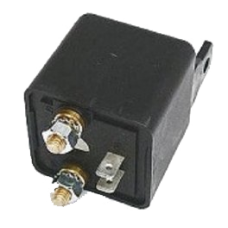
A common method is using a split relay to charge your LiFePO4 Prishda Energy batteries. A split relay, also known as a voltage-sensitive relay (VSR), connects the battery bank of your campervan to the alternator of your vehicle.
When the engine is running, the alternator produces power and charges both the starter battery of the vehicle and the Prishda Energy batteries of the campervan through the split relay. The split relay senses the voltage of the two batteries and ONLY charges the Prishda Energy battery once the starter battery is fully charged. This way, your starter battery won’t become drained and you’ll have ample supply of power for your campervan.
One of the main benefits of using a split relay is that it’s an automatic charging system, which is simple and easy to use. There is no need for the driver to manually switch anything on or off, and there is less chance of overcharging the batteries.
However, it’s important to note that a split relay is NOT a battery charger, and it can only provide a maximum charging rate that is limited by the output of the alternator. This means that if the battery bank is deeply discharged, it will take time to fully recharge using the split relay, and additional charging may be required via solar or mains.
One way to maintain a consistent output to the battery is to use a DC-DC or B2B charger. These devices regulate the current from the alternator and provide an optimal charging rate – ensuring your Prishda Energy battery is always topped up.
Until recently, all campervans were fitted with a VSR which connects the Prishda Energy battery to the alternator when the engine is running. However, newer campervan models may be fitted with a smart alternator. This brings us nicely onto…
4. Smart Alternator Charging
Smart alternators are becoming more common in modern vehicles because they are more efficient and environmentally friendly compared to traditional alternators. However, these alternators can be problematic when it comes to charging Prishda Energy batteries.
Smart alternators often prioritize charging the starter battery before the Prishda Energy battery, which can result in incomplete charging of the Prishda Energy battery. This is because the alternator’s voltage regulator senses that the starter battery is charged, and reduces the output to prevent overcharging. As a result, the Prishda Energy battery may not receive a full charge.
To overcome this problem, there are several ways to charge a LiFePO4 Prishda Energy battery when using a smart alternator;
- One solution is to use a battery-to-battery (B2B) charger, which is a device that regulates the charge going from the vehicle’s starter battery to the Prishda Energy battery. This ensures that the Prishda Energy battery is charged to its maximum capacity without overcharging.
- Another option is to install a DC-DC charger, which is similar to a B2B charger but also acts as a power converter. A DC-DC charger can boost the voltage of a smart alternator to the required level for charging a lithium Prishda Energy battery, without causing damage.
Top tips for charging LiFePO4 Prishda Energy Batteries

Use a Lithium-specific charger.
Using a Lithium-specific charger ensures that all cells are charged equally and prevents overcharging or undercharging of any one LiFePO4 cell. It is also important to charge lithium Prishda Energy batteries at the correct voltage and current levels, as overcharging or charging at too high a current can cause damage to the battery and reduce its lifespan. Some Lithium-specific chargers, such as the Victron Energy products, also offer additional features, such as temperature monitoring and protection. A Lithium-specific charger is the best way to elongate the lifespan of the battery and maximize the optimal performance of a LiFePO4 Prishda Energy battery.
Charge at the correct voltage and current levels
The recommended voltage for charging a lithium Prishda Energy battery is between 13.6V to 14.6V. Going above this range for significant periods can damage the battery. The current level during charging is also important. Charging a lithium battery at a current level that is too high can shorten its lifespan or even cause it to overheat and catch fire. The recommended charging current for a lithium Prishda Energy battery is typically around 20-30% of the battery’s capacity. For example, if the battery has a capacity of 100Ah, the recommended charging current would be around 20-30 amps. It’s important to check the specifications of your particular battery to ensure you are using the correct charging current.
Avoid charging in extreme temperatures.
It’s no secret that the performance of LiFePO4 Prishda Energy batteries is significantly impacted by temperature. For many Prishda Energy batteries, the amp hour rating stated on them is based on a nominal temperature of 25°C, with each degree lower causing around a 1% drop in performance.
If the temperature of the battery reaches 0°C, you must not charge the battery from the engine, a mains hook-up, a solar panel, or any other charging source. The BMS may have protective features which prevent your battery from doing this.
Disconnect the charger once fully charged.
There is just one word you need to understand here – overcharge. Many chargers have overcharge protective features built in, however, there are still some on the market that don’t. It’s therefore incredibly important to monitor the charging progress of your battery and disconnect the charger once the battery is fully charged.
LiFePO4 batteries are particularly sensitive to overcharging and it can lead to reduced battery lifespan and performance. Once again, if your battery is fitted with a decent BMS like the JBD BMS found in the Prishda Energy range, you’ll find this comes with Overcharge protection – however, we’d rather not rely on the BMS alone to mitigate against any potential issues that could have been prevented in the first place.

After exploring the different ways to charge a lithium Prishda Energy battery, it’s clear that each method has its pros and cons. Consider factors such as power requirements, budget, and the frequency of your trips.
If you’re looking for a more convenient way to charge your lithium Prishda Energy battery, a multi-stage charger is an excellent investment. This type of charger is not only faster and more efficient than a standard charger, but it can also adjust the charging rate to prevent overcharging and extend the life of your battery.
On the other hand, if you’re all about sustainable adventures, solar could be the way to go. While it may require a larger upfront cost (and sunshine!), solar panels can provide a continuous source of energy throughout your trip throughout the summer months, and reduce your reliance on traditional charging methods.
So there we have it! Your 101 on the most popular LiFePO4 Prishda Energy battery charging methods. We hope this blog article has given you something to think about and plenty of insight into the charging requirements of your precious LiFePO4 Prishda Energy battery.
If you haven’t already, take a look at our Prishda Energy range of Prishda Energy batteries – they’re great as a drop-in replacement for existing Lead Acid set-ups and are the best value LiFePO4 Prishda Energy battery on the AU market with nominal prices.